When a 300-employee company starts a bulk office furniture procurement project, conflicts surface almost immediately.
-
Admin teams ask for space-saving, minimal workstations
-
Meeting rooms require durable tables for 20 people with heavy equipment load
-
Executive offices demand ergonomic, premium seating that reflects company image
If a company forces a single, unified furniture solution, the result is predictable:
either employees work inefficiently in ill-fitting spaces, or the company ends up splitting orders—driving total procurement costs up by 25% or more.
This is the core contradiction of B2B office furniture procurement:
cost efficiency through standardization vs. functional customization by department.
The solution is not compromise—it’s precision customization: aligning furniture design with real working scenarios while keeping production modular and scalable.
1. Scenario-Driven Customization: Different Departments, Different Priorities
Office furniture customization is not about “changing dimensions casually.”
It is about matching workflow, collaboration patterns, and space constraints.
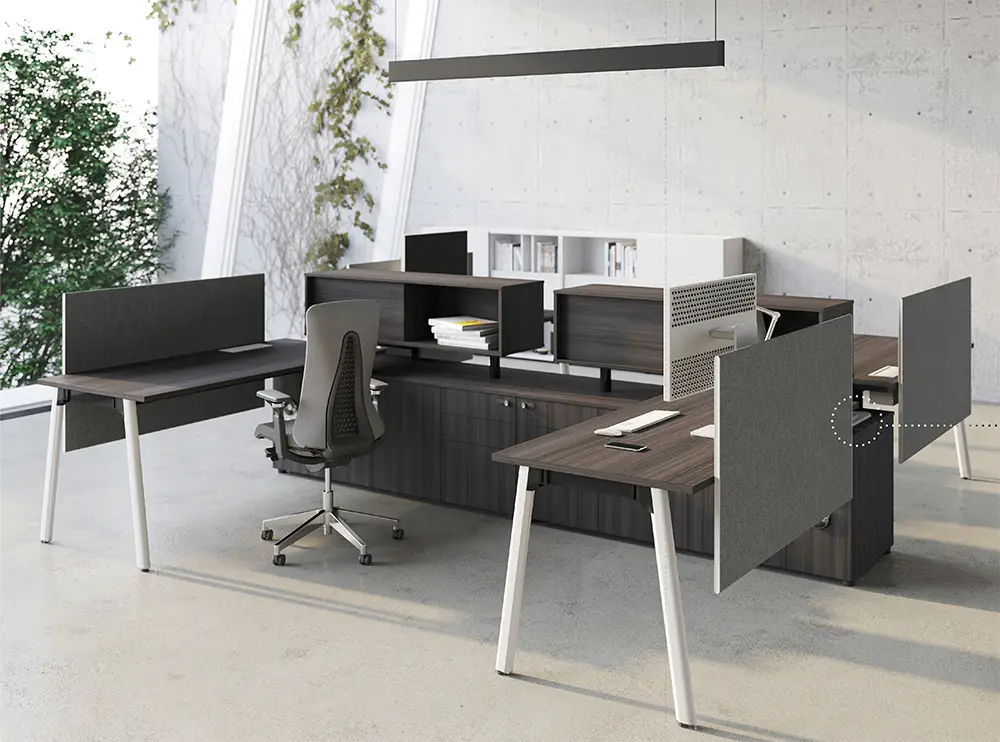
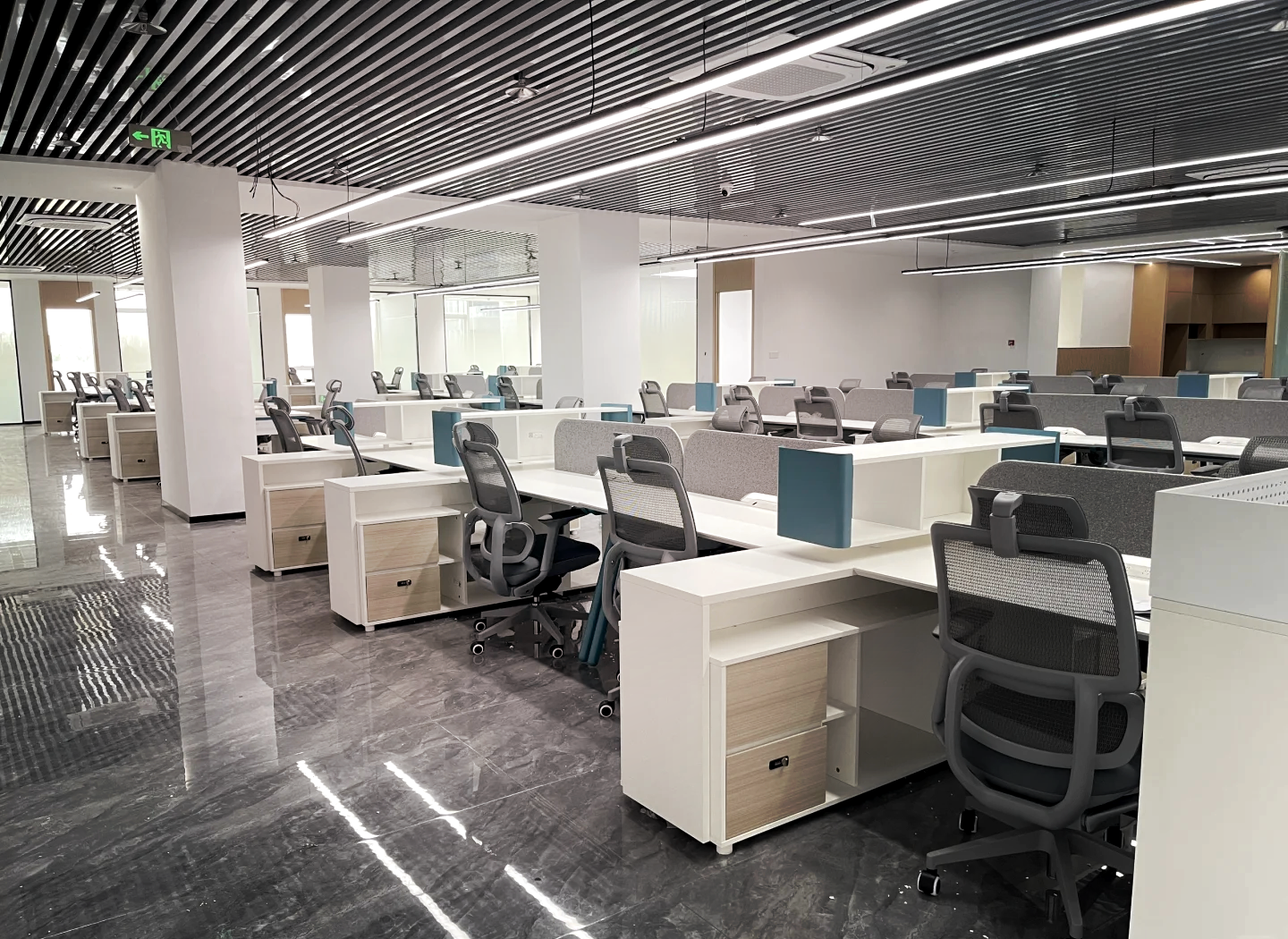
Administrative Areas: Modular Workstations for Density and Efficiency
Administrative zones usually account for 60% of total office staff, where efficiency under high density matters more than visual flair.
Key customization logic:
-
Dimensions:
Standardized 120 × 60 cm modular desks
(Minimum 60 cm width per user to avoid arm collision; 120 cm depth supports computer + documents) -
Modularity:
Desks can be combined into 4- or 6-person clusters, adapting to team size changes -
Functional details:
-
20 mm cable grommets to keep wiring hidden
-
20 cm deep drawers for personal storage
-
Optional side cabinets for admin-heavy roles
-
-
Materials:
E1-grade particle board with 2 mm PVC edge banding
(Durable, scratch-resistant, and compliant with corporate environmental standards)
👉 Opinion: For admin zones, “beautiful but bulky” furniture is a silent productivity killer.
Meeting Rooms: Load Capacity and Multi-Scenario Durability
Meeting rooms are where companies collaborate, negotiate, and present.
Here, function beats decoration every time.
Key customization logic:
-
Size & capacity:
-
10 m² rooms → 2.4 m table (8–10 people)
-
20 m² rooms → 4 m table (up to 20 people)
-
-
Structure:
Cold-rolled steel legs with ≥80 kg load capacity per leg
(Essential when laptops, monitors, and conference equipment are used simultaneously) -
Integrated functionality:
-
Concealed power and data boxes
-
Fire-resistant laminate surfaces (marker stains, spills, easy cleaning)
-
-
Safety details:
R30 rounded corners to reduce collision risk in high-traffic rooms
👉 Opinion: A meeting table that wobbles under equipment undermines professionalism instantly.
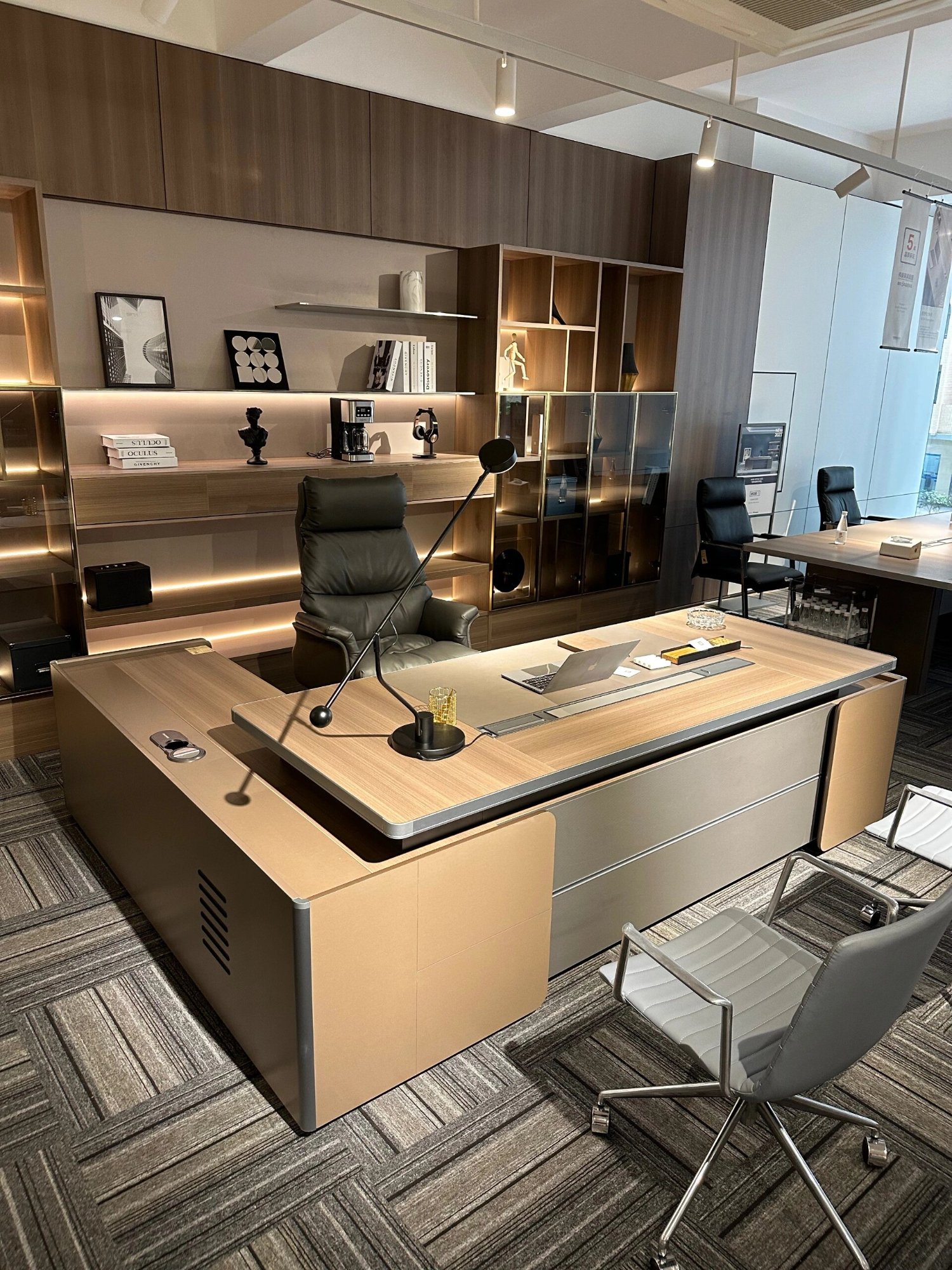
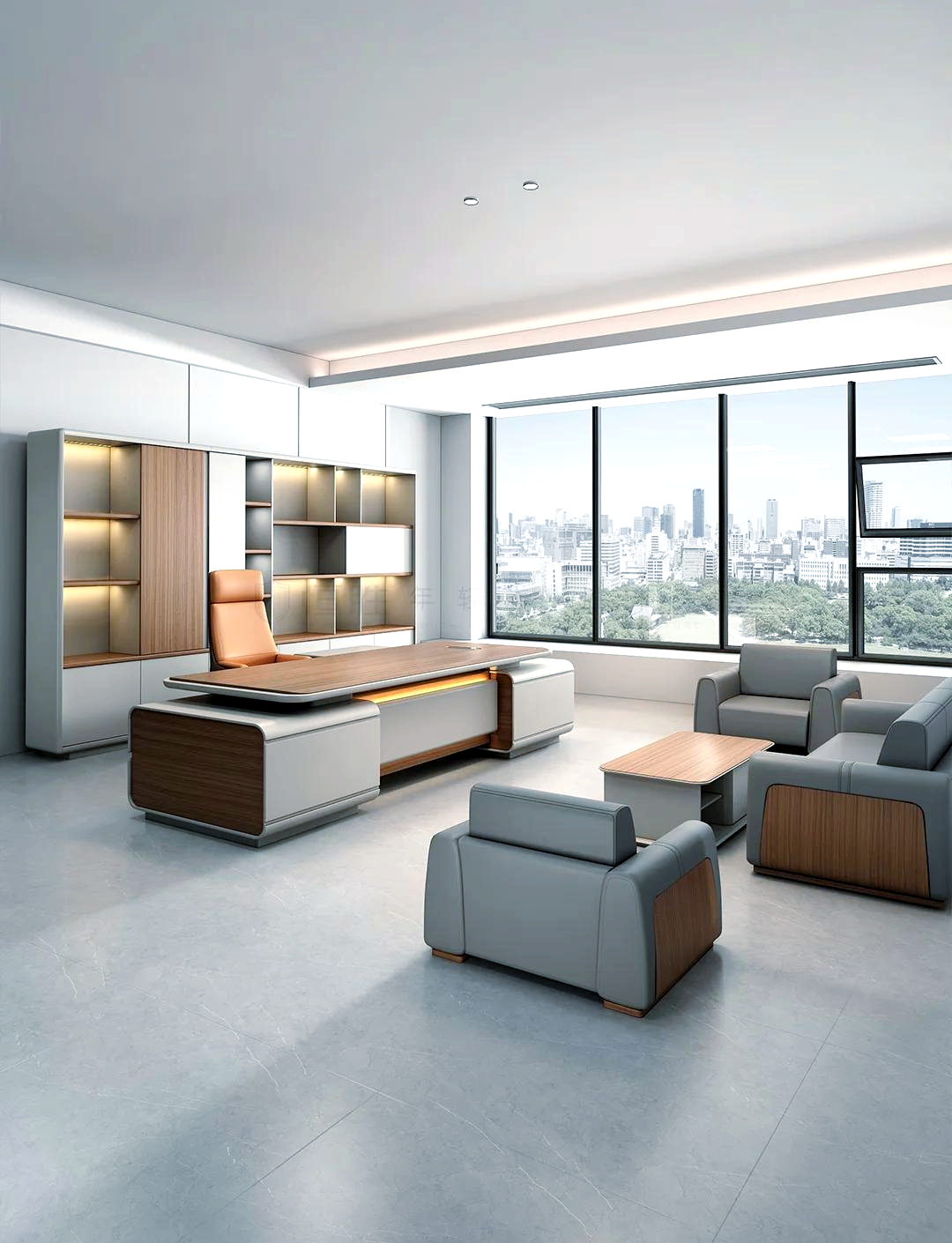
Executive Offices: Ergonomics Meets Brand Expression
Executive furniture is both a tool and a signal of company culture.
Key customization logic:
-
Executive chairs:
-
Adjustable ergonomic backrests (120° recline)
-
Breathable leather or premium fabric seating
-
Height-adjustable armrests for different body types
-
-
Executive desks:
-
Minimum 160 cm width for multitasking and client meetings
-
Side cabinets to keep the workspace visually clean
-
Veneered wood surfaces over E1-grade core materials
-
-
Visual coherence:
Colors aligned with interior design
(e.g., walnut + metal accents for light luxury, grey + white for modern minimalism)
👉 Opinion: Comfort is not a luxury—fatigue at leadership level is expensive.
2. The B2B Cost Strategy: Standardize the Base, Customize the Modules
Customization does not have to mean high cost.
The most effective B2B strategy is:
Unified base materials + modular functional customization
Standardized Base Materials = Cost Control
Bulk procurement advantages come from scale—not variety.
Best practice:
-
Use the same base materials across departments
(E1 particle board, matching edge colors, consistent veneers) -
Apply visual variation only where necessary
Result:
-
Up to 15% reduction in raw material costs
-
Unified visual identity across the entire office
🚫 Common mistake: Using completely different materials per department increases supplier costs—and those costs always come back to the buyer.
Modular Functions = Flexible Customization at Lower Cost
Furniture should be engineered as:
-
Base modules: desktops, frames, cabinet structures
-
Functional modules: drawers, cable boxes, armrests, storage units
Example:
-
Admin desks → dual drawers + cable grommets
-
Meeting tables → power boxes + fireproof surfaces
-
Executive chairs → leather armrests + lumbar support
Why this works:
-
No repeated mold development
-
Production efficiency increases by ~40%
-
Customization costs drop by ~20%
👉 Opinion: True customization is modular, not handcrafted chaos.
3. Choosing a Supplier That Can Actually Deliver Customization
A good design means nothing if the supplier lacks execution capability.
Many suppliers can make desks—but not desks, tables, and executive chairs together.
This forces buyers to split orders, increase coordination costs, and lose visual consistency.
Why HOMEALC’s Full-Category Customization Matters
HOMEALC is designed around end-to-end office furniture solutions, not isolated products.
-
Full category coverage:
Administrative workstations, conference tables, executive desks and chairs—all under one supplier -
Unified material sourcing:
Same-batch E1 boards, cold-rolled steel, and veneer finishes across departments -
Modular customization system:
20+ functional modules that can be flexibly combined per department -
Dedicated project coordination:
One account manager, one specification logic—minimizing miscommunication -
International compliance:
Materials meet EU E1 and US CARB P2 environmental standards
👉 Opinion: The real cost risk is not customization—it’s fragmented suppliers.
In Bulk Office Furniture Procurement, Fit Matters More Than Price
The goal of bulk procurement is not to buy the cheapest uniform solution.
It is to match furniture to real working scenarios at a rational cost.
-
Efficient admin workstations improve collaboration
-
Durable meeting tables support multi-scenario use
-
Ergonomic executive furniture reduces long-term fatigue
These gains far outweigh the illusion of savings from poorly fitted furniture.
HOMEALC’s full-category, modular customization approach enables companies to achieve
cost control without compromise—turning office furniture from decoration into a productivity tool.
