Most people think they’re buying a desk.
In reality, they’re choosing a place they’ll spend hours at—every single day.
You look at the size, the price, maybe the design.
You bring it home, set it up… and a few days later, something feels off.
Your back gets tired. The surface gets cluttered. You stop wanting to sit there.
A desk isn’t just furniture.
It’s where your focus lives—or disappears.
So instead of asking “Which desk is better?”,
ask yourself one thing first:
What kind of life do you want to live at this desk?
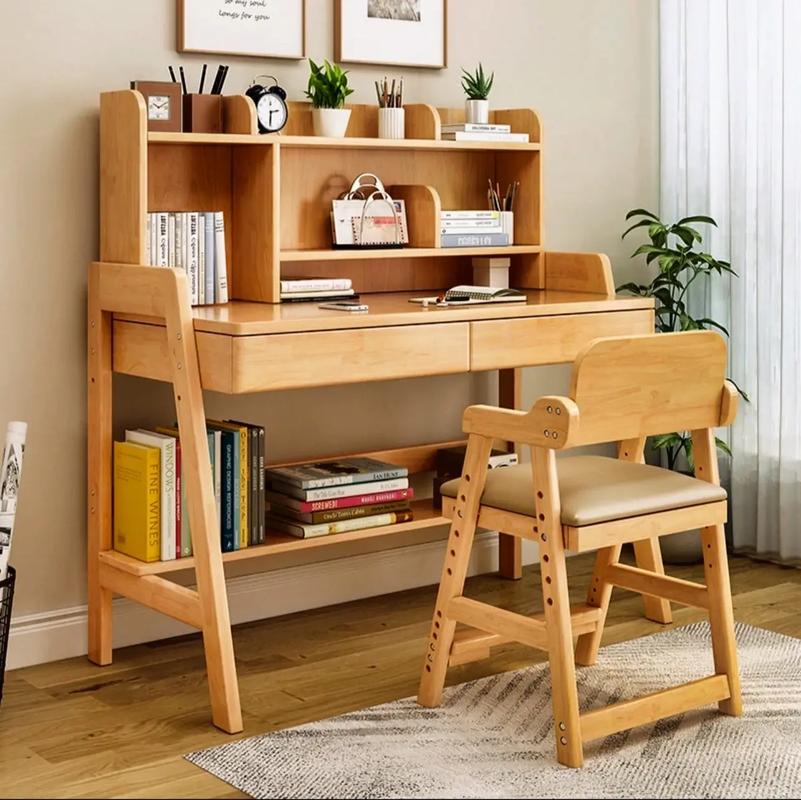
Before Style, Get the Height Right
The biggest mistake people make?
They choose a desk with their eyes, not their body.
If the height is wrong, nothing else really matters.
Here’s a simple rule:
When you sit down, your elbows should rest naturally at desk level—no shrugging, no leaning forward.
A rough guideline:
- Desk height ≈ 43% of your height
- Chair height ≈ 25% of your height
For example, someone who is 160 cm tall would be comfortable with a desk around 67 cm high and a chair around 39 cm.
But in real life, you don’t need perfect math.
👉 What matters more is the difference between desk and seat height—about 30 cm.
That gap helps reduce strain on your knees, back, and neck.
Think of it this way:
You’re not choosing a desk. You’re choosing a position your body can stay in for hours without resistance.
Desk Width: It’s About Space to “Open Up”
Most people only ask: “Can it fit my laptop?”
That’s the wrong question.
The real question is:
Do you have enough space to spread out?
A practical range:
👉 120–150 cm (47–59 inches) wide
Why? Because your natural arm span needs room.
If the desk is too narrow, your movements shrink—and over time, so does your comfort and focus.
A wider desk doesn’t just give you space.
It gives you permission to work freely.
For Students: It’s Not About Studying, It’s About Posture
When choosing a desk for kids, people often focus on storage or appearance.
But the real priority is simple:
Growth.
Children’s bodies change constantly.
If the desk doesn’t adapt, their posture suffers—and that affects more than just comfort.
👉 Adjustable desks and chairs are the best option.
A good sitting position should look like this:
- Feet flat on the floor
- Knees at about 90 degrees
- Back naturally upright
When posture is right, studying becomes easier—without forcing it.
Don’t Overcomplicate Storage
A common mistake with student desks:
too many shelves, too many compartments.
More storage often leads to more clutter.
A better approach:
- Frequently used items at eye level (like a small shelf)
- Less-used items in drawers
- Heavier items under the desk
Good storage isn’t about having more space.
It’s about making things easy to reach.
Material Matters More Than You Think
If possible, go for solid wood.
Not because it’s “premium,” but because:
- It lasts longer
- It’s more stable and reliable over time
For something your child will use every day, durability matters more than trends.
For Adults: A Desk Defines Your Boundaries
Working from home has changed how we live.
When your workspace blends into your living space, something subtle happens:
you’re never fully working, and never fully resting.
That’s where a desk becomes more than furniture.
👉 It creates a boundary.
A Clean Desk Helps You Start Faster
For daily work, you don’t need complexity.
A simple, open desk setup often works best:
- Keep only essentials on the surface
- Place documents or tools to the side
- Open your laptop, and you’re ready to go
Less visual noise = less mental resistance.
If You Have Space, Consider an L-Shaped Desk
An L-shaped desk isn’t just bigger—it’s smarter.
It naturally separates functions:
- One side for focused work
- One side for storage or secondary tasks
Same room, but it feels like two zones.
That subtle separation helps you “clock in” and “clock out,” even at home.
Style Isn’t Just About Looks
For adults, a desk is one of the few places you can make your own.
A plant, a small object, a clean lamp—
these don’t directly boost productivity.
But they do something more important:
They make you want to sit down.
And wanting to sit down is where productivity begins.
One Honest Thought
A desk won’t make you disciplined overnight.
But it will decide whether you can stay there—comfortably, consistently, without resistance.
Sometimes it’s not that you lack focus.
It’s that your setup is working against you.
So choosing a desk isn’t really about furniture.
It’s about creating a place
where starting feels natural—and staying feels easy.
