Most people ask the wrong question when buying a wardrobe.
They ask:
“How big should it be?”
But the real question is:
How do I actually use my wardrobe every day?
A wardrobe isn’t just storage.
It’s a system that reflects your habits — how you organize, how you reach for things, and whether you keep things in order.
If you don’t think this through first, even the “right size” will end up feeling wrong.
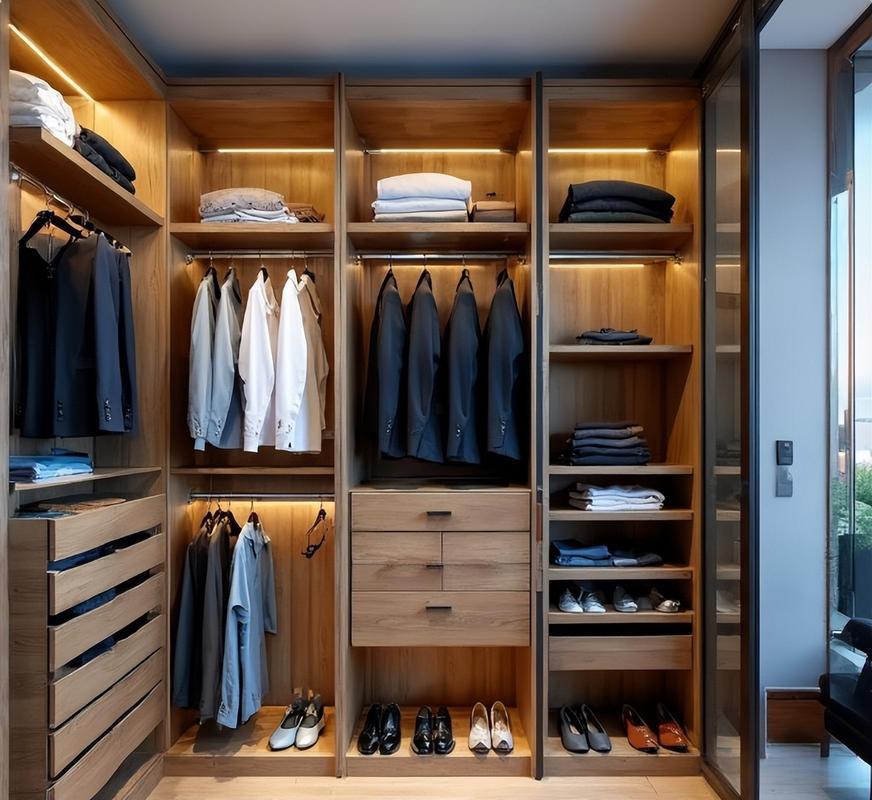
Before Dimensions, Understand What You Need to Store
The core principle of wardrobe design is simple:
Give everything a place — instead of just filling space
1. Your clothing determines your layout
Some people own a lot of clothes, but mostly T-shirts.
Others own fewer pieces, but lots of coats and dresses.
They cannot use the same wardrobe effectively.
Think about:
- Do you hang more or fold more?
- Do you have many long garments (coats, dresses)?
- Do you need space for bags, accessories, or suitcases?
A wardrobe isn’t better because it’s bigger —
it works because it’s allocated properly.
2. Space is not about fitting — it’s about flow
Wardrobes tend to dominate a room.
If the size isn’t planned well,
you lose movement space without realizing it.
Before deciding, check:
- Will the doors block anything?
- Does it affect how you walk through the room?
Most regrets don’t come from “too small” —
they come from poor spatial balance.
3. Open vs. closed: this is really about lifestyle
Open wardrobes: easy access, everything visible
But only work if you stay organized
Closed wardrobes: slightly less convenient
But they hide visual clutter
There’s no “better” option —
only what fits your habits.
Now, About Dimensions: There’s No Perfect Number, Only Safe Ranges
1. Depth: 55–60 cm is a safe zone
Too shallow → clothes get wrinkled
Too deep → wasted space
So 55–60 cm isn’t a rule —
it’s simply:
A range where problems are less likely
2. Width: base it on people, not guesswork
- One person: 120–240 cm
- Two people: at least 200 cm
Most people underestimate how fast wardrobes fill up.
What feels “enough” today
often becomes not enough very quickly.
3. Height: above 240 cm changes the logic
Once you go beyond 240 cm,
you’re no longer designing one unit — but two zones.
The upper section becomes low-frequency storage:
- Suitcases
- Seasonal items
Don’t design it for daily use.
4. Doors: don’t just think style — think durability
- Hinged doors: 45–60 cm
- Sliding doors: 60–80 cm
Bigger doors = heavier doors
Heavier doors = more stress on hardware
Most wardrobes don’t fail at the structure —
they fail at the doors first.
What Really Matters: Internal Layout
The exterior is structure.
The interior is usability.
1. Hanging space defines daily efficiency
- Long garments: ≥130 cm
- Short garments: ≥80 cm
If it’s too short, you’ll start folding clothes that shouldn’t be folded.
And once that happens:
wrinkles, mess, wasted time.
2. Shelves: more is not better
Recommended:
- Width: 33–40 cm
- Height: at least 35 cm
Too many shelves usually lead to clutter.
A bit of empty space actually helps.
3. Drawers: where order begins
Best for:
- T-shirts
- Underwear
- Soft or delicate items
Recommended height: 15–20 cm
Drawers solve one key problem:
Small items finally have a fixed place
4. Pull-out baskets: useful, but don’t overuse
Good for frequently used items.
But because they’re often open-structured:
- Limited support
- Limited organization
Use them wisely — not everywhere.
One Last Thing Most People Overlook
You’re not buying a wardrobe.
You’re buying:
The experience of opening it every morning for the next few years
If it’s well designed,
you won’t even notice it.
If it’s not,
it will quietly frustrate you — every single day.
So how do you choose the right wardrobe?
Don’t start with dimensions.
Start with:
👉 How your daily life actually works
